Ever wonder how an annual marketing calendar can help your business? Whether you’re managing your own marketing or working with an agency, implementing a year-long marketing calendar can help you achieve your business goals.
By planning ahead, you can manage your resources accordingly, track your progress, stay flexible with any changes, and grow your sales and brand visibility. Without a plan, you may run the risk of strategic confusion, budget mismanagement, missed opportunities and a lack of brand consistency in the long run.
We’ll walk you through how to plan your annual marketing calendar, and explain how it can keep your business on track for success.
Create a Calendar and Define Clear Marketing Goals, Objectives, Strategies, and Tactics
To plan your marketing ahead of time, we highly recommend you use the GOST framework to help you tackle bigger problems by dividing them hierarchically. In order to do this, you need to have a clear picture of your business goals and objectives. This may help ensure your business is working toward strategic and measurable goals and that you have a plan to achieve them.

What Are Goals and Objectives?
Goals
Goals are broad and more high-level desired outcomes. They provide the overall direction and purpose of your brand’s marketing and growth strategies. For example, your goal might be to increase online sales.
Objectives
Objectives are the specific, measurable actions needed to accomplish your goal. They are short-term and actionable. They define a clear outcome within a specific timeframe. One goal can have multiple objectives. For example, in order to increase your sales, one of your objectives can be: Increase the amount of online leads on your website by 50% in the next quarter.
Creating Strategies and Tactics
When it’s time to create an actionable plan, your strategy and tactics may make all the difference. Strategizing the different ways to make your objectives happen will outline how they will be achieved. But what is the difference between strategy and tactic?
Strategy
Strategy outlines how goals will be achieved and how objectives will be reached. Generally you have multiple strategies under one objective. Continuing with the example above, if you want to increase sales by increasing website leads, a strategy could be to drive more qualified traffic through digital marketing.
Tactic
Tactics are specific actions that support the strategy. They are the practical and specific steps taken to achieve the objective. An example of a tactic that could fall under this strategy, would be to launch a Google Search Ad campaign targeting high-intent keywords to drive more potential buyers to the website, with a budget of $4,000 each month for the next quarter. A separate tactic would be to do the same using Facebook Ads. Each strategy can have multiple tactics.
Divide Your Marketing Calendar by Quarters and Months
A full year can feel overwhelming, but breaking it into quarters makes planning more manageable. While your overall goal typically remains consistent, it’s common to adjust your objectives, strategies, and tactics each quarter. This approach not only simplifies execution but also helps allocate resources effectively throughout the year. It also allows you to evaluate the results of each month and quarter, and adapt for the future.
Types of Marketing Calendars
While you can create a general calendar for your marketing efforts, you may also benefit from specific types of marketing calendars to help you break down your marketing plan and customize it with more detail. You can use tools like a physical calendar, Microsoft Excel or Google Sheets, or a free or paid online tool to sync with your team.
Other types of calendars you could use include:
- Campaign calendar: May show major campaign and its time period.
- Events calendar: May show webinars or industry-specific events.
- Email calendar: May plot out email send dates along with times, audiences and campaigns.
- Editorial or content calendar: May show blog content and include publish dates, draft deadlines, authors and campaigns.
- Social media calendar: May show what you’re publishing on social media, which networks you’re using and when to publish content.
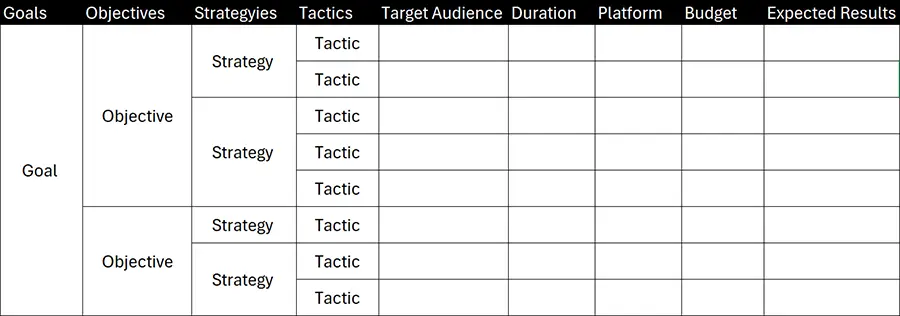
This is an example of a marketing calendar. You might add or edit columns as needed.
Consider Seasonality and Business Milestones When Planning Your Marketing Strategy
When thinking through what you’d like to include, consider adding milestones that you want to account for.
These may include:
- Big campaigns
- Product launches
- Sales
- Regular content
- Webinars or live events
- Industry conferences
- Emails
- Holidays
One big question for many marketers is “when”? Whether you’re ready to launch a campaign, publish social media posts, or market something that happened sooner than anticipated, the “when” is something you prepare for and adapt to so you can avoid last-minute ruses or missed opportunities.
When creating your marketing plan over the year, consider planning marketing campaigns around key dates, such as product launches or industry events. For example, if you’re attending an industry event or conference, plan to prepare a few social media posts around the event that may coincide with what’s happening.
Identify holidays or seasonal peaks to help your visibility. If your business is running a sale, consider what time of year would make sense for your marketing. Black Friday? Small Business Saturday? While there is typically a lot of “social noise” around these times of year, it can also help you work hard to stand out and show off why you’re here and that you have something to offer!
Adapt to change and be ready for anything. Preparing campaigns and content that isn’t time sensitive might help you in the long run. If a product launch isn’t quite ready when you thought it would be or construction is behind on a new location, having extra content ready to go can help you keep things moving.
Mini Marketing Case Study
Preparing for seasonal changes can lead to outstanding results.Our client, MagnaTrack, sells outdoor patio screens, which offer strong protection against hurricanes. Since Florida’s hurricane season runs from June to November, we planned ahead and launched an awareness and lead generation campaign (check out this example).
As a result, each time a new hurricane was forecasted to hit the East Coast, we showed up first for users searching for home protection solutions — leading to a significant boost in sales and ROI.
Use Scheduling Tools To Maximize Your Marketing Efficiency
Scheduling tools can help you manage marketing tasks efficiently across platforms like your website, social media accounts, Google Ads, and paid ads. By planning ahead, you ensure consistent visibility while freeing up time for other important tasks.
Schedule Social Media Campaigns
Save time by scheduling social media posts and avoid last-minute content creation. Creating them ahead of time will come in handy, plus, you can go back and edit if details have changed, like event times or link updates. Use built-in tools on platforms like Instagram and Facebook or third party services like Buffer to schedule posts.
Automate Digital Ad Campaigns
Platforms like Google Ads and Meta Ads help you plan ahead so you can sit back and monitor results as they’re available. Set campaign start and end dates that align with your marketing calendar.
Plan Content Ahead of Time
Consider using third-party platforms like Hootsuite, Buffer, and HubSpot to manage multiple accounts from one dashboard, simplifying your workflow. Set publish dates for blogs, emails, social media accounts and more to help you save time and create a regular posting schedule to engage with your audience consistently.
Stay Adaptive and Optimize Marketing Campaigns Regularly
Planning ahead for your annual marketing calendar can be helpful, but make sure you leave room to check, adapt and optimize your campaigns.
Evaluate, Adjust, Repeat
Take advantage of built-in analytics features in platforms like Meta Ads, Google Analytics or other social media platforms to see how your content is performing and what your next steps are. Look back to your brand goals and objectives and evaluable how your campaigns are aligning to see if you’re getting the results you want.
Allow for Flexibility
Leave space for the unknown in your year-long marketing calendar. Whether it’s an urgent campaign or last-minute adjustments to your most important marketing efforts, having room to breathe can make all the difference. Being nimble and having the ability to adapt means your campaigns remain effective in dynamic markets.
Streamline and Optimize Your Marketing Efforts
To recap, planning your marketing campaigns ahead of time can help you achieve your business goals and save you time and energy.
Other important benefits include:
- Proactive planning
- Stay organized
- Be consistent
- Allocate resources and stay on budget
- Create timely campaigns that support your goals
Creating a year-long marketing calendar may be complex and requires constant attention.
Consider consulting with the marketing experts at Creative Springs to ensure your marketing calendar aligns with your business goals and delivers on the measurable results you need. Contact us today!